OUR mission statement

MADE ON THE LEFT was founded in 2008 by independent designers to support Western Australian creative talent. We hold bi-annual handmade craft markets to showcase local designers.

Being on the left hand side of Australia no longer

means you'll be at a disadvantage.

Our aim is to support all creative designers and events showcasing independent labels. MOTL is a not-for-profit, non-partisan organisation. You may wonder why we promote other markets besides MOTL; it’s because it’s not about us, its about you; the buyers and sellers of indie wares. Here at the blog, you’ll discover up to date information about our latest market, the low-down on some of Perth’s emerging talents, other opportunities for artists and designers and a little bit of fun stuff too. It’s all right here… welcome!

Showing posts with label display. Show all posts

Thursday, February 13

Guest post: 10 Qualities That Attract Wholesale Buyers

You’ve spent years perfecting your products, they sell well at markets and you’ve built up a loyal following. But how do you know if you’re ready to start selling wholesale? 

Getting shops to take you seriously as a potential wholesaler can be an uphill battle. What do they want? What are buyers looking for but they never tell you about? Below are 10 qualities that you as a business possess which will separate your products from all the competition and show buyers that you are a brand worth taking seriously.

1. You Make Products That Will Sell In Stores: 
Seems just a little bit obvious but sometimes what sells well in a market or online will not sell well in a retail shop. Personalised items or products that do not display well (made to fit clothing or un-stretched canvases) will probably be rejected by a wholesale buyer because they won’t be able to display the products well enough to get a sale.

Before approaching a shop ensure that what you are selling is something they can display and sell on the spot.

2. You Look Like A Business – Not A ‘Hobby’: 
Shops will be less likely to take you seriously if they think this is just a phase you’re going through. Always give shops every impression that you are a business; return emails and phone calls promptly, have answers to questions they might ask you at the ready, know what kind of delivery time you’ll need, have your wholesale policies in place and stay friendly and approachable but refrain from talking about personal subjects until your relationship reaches that level.

3. Your Branding Is Cohesive: 

Make sure everything about your brand tells the same story of who you are. This includes logo, packaging, website design, business cards, brochures and more. Try this exercise to see if you have cohesive branding: grab one of everything you have that relates to you business that wholesale buyers and customers will see. Spread it all out in front of you and take a good look. What does your brand say? Does everything flow together and look like it all belongs to each other? If not, revise the aspects that do not work and redesign them so they do.
Ella & Lily Photo by Brian Hadwin

4. You Have A Unique Selling Position: 

What is it that you do that sets you apart from everyone else? Do you:
  • Create eco friendly products? 
  • Use materials that are locally sourced? 
  • Use special/unique packaging? 
  • Donate to charity with profits? 
Try and refrain from simply stating “my unique selling point is that each item is handmade”. In a world full of handmade products for sale that isn’t a unique selling point. Instead find one aspect that you do that other artists aren’t doing. For example: “My cupcakes are made using only locally sourced ingredients”, “I donate one item I make to a local charity for every dozen I sell” or “My bath salts, including the packaging are 100% biodegradable”

5. Your Products Can Be Consistently Produced: 
From now on when selling to shops you need to be able to ensure that every item is the same as the last so wholesale buyers never get a shock when opening up your latest order. In some occasions you won’t be able to make identical items, necklaces featuring wood found on the beach will never be identical but customers should easily be able to tell the difference between the large wooden necklace and the small wooden necklace. Features such as clasps and wire/chain should always be consistently reproduced.

6. You Have Thought About How Your Items Will Be Displayed: 
You’ve thought long and hard about how each of your items will be displayed and worked on making changes so shops can get the best bang for their buck. Can your products be stacked on top of each other or can you use different packaging so they take up less space? Is everything eye-catching as a display? Do you need to display information with your products and is that noticeable as well?

Don’t be afraid to go back and rethink your packaging if it isn’t working for you.

7. You Have Amazing Photos You Can Give Shops: 
Always have a collection of images you can give a shop in the chance they request one. Shops will sometimes request images so they can put them on social media, send with a press release or add to their website.

You will need at least one image per product with a plain white background and one image per product which includes props and/or people. Make sure they are crisp and clear, show special details, illustrate packaging and show who you are as a brand.

8. You Can Offer Your Products At A Price Which Allows The Shop To Add A Profitable Mark-Up: 

It may seem unfair that a shop gets to make as much if not more money than you and all they do is selling. But don’t forget the point that they are actually selling your products, without them you would have to sell the items yourself, a costly and time consuming undertaking. They also have many overheads that they need to pay in order to sell your items. If you cannot sell your products at a reasonable wholesale price then you’ll need to change some aspect of your production/costs in order to do so or forgo being able to sell your items at retail outlets.

9. You Can Deliver Your Wholesale Orders On Time: 
To do this you’ll need to perfect your manufacturing process, work consistently until the order is completed and ensure that no matter what else is happening in your professional/personal life you can fulfil the order.

10. You’re In This For The Long Haul: 
Realistically, most businesses take 2 – 3 years of wholesaling before they break even and much longer to turn a decent profit. This means you’ll spend years selling wholesale to shops before it becomes financially worthwhile for you. The personal benefits will kick in almost immediately but perseverance and hard work will get you through the long years. This is good news for retail outlets who will need to know that you will stick around and that the time and money they will invest in you will pay off for them long term.


Jacquie Hughes is a former committee member of Made on the Left. Find her here:
delightsociety.com.au

Monday, June 10

Stallholder Profile: Spotlight on "Little Mo and Friends"


Little Mo and Friends was the winner of our Best Stall Display for our November 2012 market. Not only did Helena win us over with her display, she also makes the sweetest things for young and old! Let's go behind the scenes...


Tell us a bit about yourself
I’m Helena, creator/illustrator of Little Mo and Friends.


What materials do you use?
Ink and paper mostly when I’m drawing. And if I am making products from my art, I like sourcing out recycled paper and vintage art frames or vintage pendants to frame my drawings.


What steps do you take to prepare for a market?
I try to at least have two or three new products to feature in my market, just to make it exciting for my return customers. When I style my stall, I usually make that new product my feature piece.


What is your favourite part of the creative process?
Getting lost in my drawings and observing my rough sketches evolve into physical products that are worn and cherished by my customers.


What’s been your most popular item or line to date?
For my online shop it’s been my mystery bag. If you’re unsure of what to buy in my shop, grab a mystery bag and I’ll fill it with art goodies; prints, notebooks and jewellery. When I first listed it in in my shop, my husband said nobody is going to buy it because they don’t know what’s inside it. But it’s been my most popular item, so I guess people do like surprises!

For my markets, it’s my illustrated jewellery. I think it’s an affordable way to collect my art and wear it everyday!


What is the most exciting thing that has come out of selling your designs through markets?
Meeting my online customers in person and meeting new friends and new customers! I’m always so grateful for their support and encouragement.


What advice would you give someone who wants to sell their crafts?
Make something totally unique and all about you. Don’t copy. Be original.


What goals do you have in store for the future?
Drawing and producing more artworks, drawing a book and having a small exhibition would be nice.

www.littlemoandfriends.com

www.facebook.com/littlemoandfriends

Thursday, May 23


The Craft & Quilt Fair is on now with displays, exhibitions, workshops, make-and-take classes and retailers selling thousands of unique craft supplies.
Tickets includes entry to the QuiltWest Exhibition with quilts designed and made by members of the West Australian Quilters Association Inc.

When: Wednesday 22 May 22 to Sunday 26 May, 2013
Open 9am – 4:30pm daily

Where: Perth Convention Exhibition Centre, 21 Mounts Bay Road

How much: Adults $16
Seniors Card holders $14
Children (from 5 to 16 years) $9, under 5 years free
Family – 2 adults & 2 children $40

Friday, March 22

Stallholder Profile: Spotlight on "Christobel"


Christobel was the winner of our "Best Stall Display" at our Winter 2012 market. Here we find out what goes on behind the scenes.

The Christobel stall at Made on the Left market
Christine Lovitt of Christobel was born in Dublin, Ireland and migrated to Perth in 1988 with her husband and three small children. She has worked as a lawyer since arriving in Perth and only when she changed to part-time hours in 2007 did she find the time to pursue more creative activities.

What inspires you to create?
Sometimes an idea will just come to me – other times I will see something when I am out and about which will give me an idea.

What materials do you use? 
Almost everything I use is pre-loved. I make paper sculptures out of old books, sheet music and atlases, journals using old books covers, jewellery using old bakelite buckles and buttons, cushions out of vintage leather and any other treasures that I pick up from time to time which can be put to another use.


What steps do you take to prepare for a market? 
First I clear my workspace, then I think about what time of year my next market is going to be and what seasonal things I can make. Then I look at what new treasures I have collected and work out what to do with them. Because I am always making things, one market kind of rolls into the next fairly seamlessly without having to say up all night making enough stock.

What’s your number one market tip? 
Practice setting up your stall at home beforehand so that you can perfect the overall appearance and not be stressed on the day. How your stall looks can make a big difference to how shoppers perceive your products.


What is your favourite part of the creative process? 
Experimenting with new ideas. For every new thing that appears on my stall there will have been an equal number that didn’t work out and ended up in the bin. I love scouring church fetes, Sunday markets and op-shops for old treasures and then the challenge of making something new with them.


What’s been your most popular item or line to date? 
My paper sculptures and my tiny plants in vintage teacups.

What is the most exciting thing that has come out of selling your designs through markets? 
The most exciting thing was getting an order from overseas for some of my paper sculptures which had appeared in a Sydney Morning Herald article on craft markets.

What advice would you give someone who wants to sell their crafts? 
Think about your brand and where it fits in the marketplace, then just get out there and apply for stalls at markets like Made On The Left. It is the best way to test your ideas and to get feedback.


What goals do you have in store for the future? 

Ultimately I would love to have my own studio space from which I could sell my pieces. My husband loves finding and restoring old furniture and both my daughters are very creative so it could be a family venture!

Thanks Christine!
xx MOTL team

Friday, September 21

Stallholder Profile: Spotlight on "Little L"


Made on the Left first came across Lauren Mills at the KickstART Youth Markets in April of this year. We were so impressed with her display, we awarded her Best Stall Display with the prize being a free spot at the July Made on the Left market. Here we get the scoop on Lauren, her inspirations, creative processes and market tips!  

Lauren with her prize winning display at the KickstART Youth Markets

Tell us a bit about yourself.
My name is Lauren Mills; I am 23 years old and currently finishing my final year of Interior Design at university. I started up my small business Little L at the beginning of this year and have loved every moment of it since.


What inspires you to create?
The materials I use are my main inspiration. I love repurposing old materials and giving them a new life, for example: my stamp collection from my childhood has now turned into necklace pendants and brooches, old books from the top shelf of a second hand store are now a myriad of ornaments and artwork, paper dress patterns are now mini and large bouquets of flowers.
Turning trash into treasure and just making beautiful things is what inspires me to keep on going.


What materials do you use?
As said above I like to reuse old items and repurpose used materials. Books, dress patterns, postage stamps, sheet music, lace, buttons, dominos and scrabble letters make up to main collection of my materials. I also use all recycled pieces of furniture for my market displays, all found at bulk rubbish collections or at second hand markets.


Little L at the Made on the Left July 2012 market

What steps do you take to prepare for a market?
A lot of preparation goes into the week prior to a market, usually I clear out a space in the house like the living room or garage and layout my whole display with all my furniture and pieces so I can get it just right. I get my whole family involved getting feedback and help with planning so everything runs smoothly on the day.

What’s your number one market tip?
Be prepared! I always pack a toolbox with everything I might need from masking tape to blue tack to safety pins to my pliers. You never know what might happen. For outdoors markets tarps are always a good idea especially in winter, and for indoor markets materials to fix your signage and displays with are a must.

Lauren's workspace

What is your favourite part of the creative process?
The best part of the creative process is that moment in the middle when you can finally see your ideas taking shape and coming to life. That point where whatever you’re working on starts to resemble the finished product you have pictured in your head. That’s such a rewarding moment to know you’ve overcome the difficulties of creating and things are finally turning out right!

What’s been your most popular item or line to date?
My most popular item has definitely been the handmade paper flowers from recycled dress patterns. They have consistently sold out and I can’t seem to make enough of them fast enough!

What is the most exciting thing that has come out of selling your designs through markets?
The interactions with all the other market organisers, stallholders and potential stockholders. The contacts and networking that can come from just one market is so inspirational it really keeps me eager to continue my hard work and keep pursuing this dream.


What advice would you give someone who wants to sell their crafts?
I think the best thing to do from the beginning is to research. Research the market, the product, the people you want to sell to and where you will be selling. The market scene in Perth is booming at the moment so now is definitely a good time to get involved, so have confidence in your products and take the chance. It’s a fantastic experience and the people in the Perth market scene are just lovely J

What goals do you have in store for the future?
Ideally I would like to open my own store selling refurbished furniture, and more of my handmade wares. I love what I am doing and love the creative process, but I also love the thought of the people of Perth wearing my wares and having them in their homes. For now I am just happy to get out there and keep holding stalls and enjoying every moment of it. 

Thanks Lauren!
xx MOTL Team

Friday, July 27

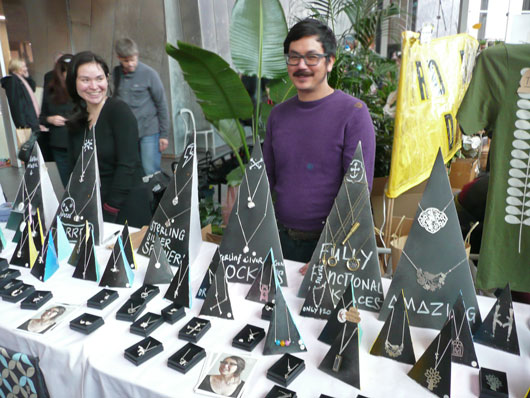
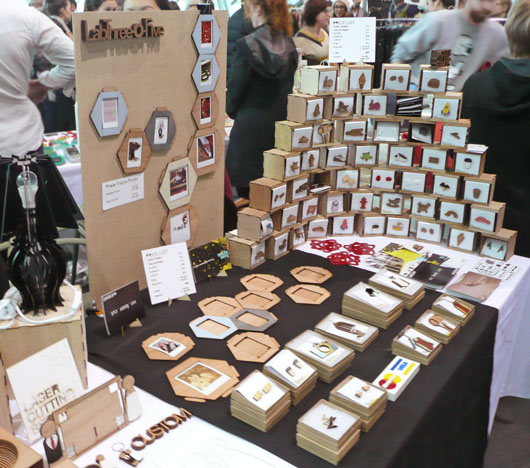
Great Market Stall Design

I was lucky enough to be in Melbourne for the recent Markit @ Fed Square and was astounded at the amazing and creative stall displays (not to mention the wonderful products)! Here are some of the best.
Note the use of colour, unusual and unique props, custom built displays, having height in the display, simplicity of materials, and most importantly having a stall design that works with your products. 

Little Lamb

Lavallier

Rabbit & the Duck


Herbert & Friends

Pigeonhole

Corky Saint Clair

Ask Alice

The Gently Unfurling Sneak
Write to me stationery


Pleaty Bunny

Jen Booth

So Little Time

LabThreeOFive


bRainbow

Stämpel Studio

Limedrop


Sandra Bowkett

Twisted Terrariums

I design things

And O Design

Bonnie Poplar

A Skulk of Foxes


Thursday, October 30

Windows On William

Here are some more photos of our window display -


Thanks to all the participating designers!!

The window will be up for another month, so be sure to pop on by fi & co on William St, Northbridge.